Most Chefs Chase Trends. Chef Narendra Panwar Chases Memory, Emotion, and Soul
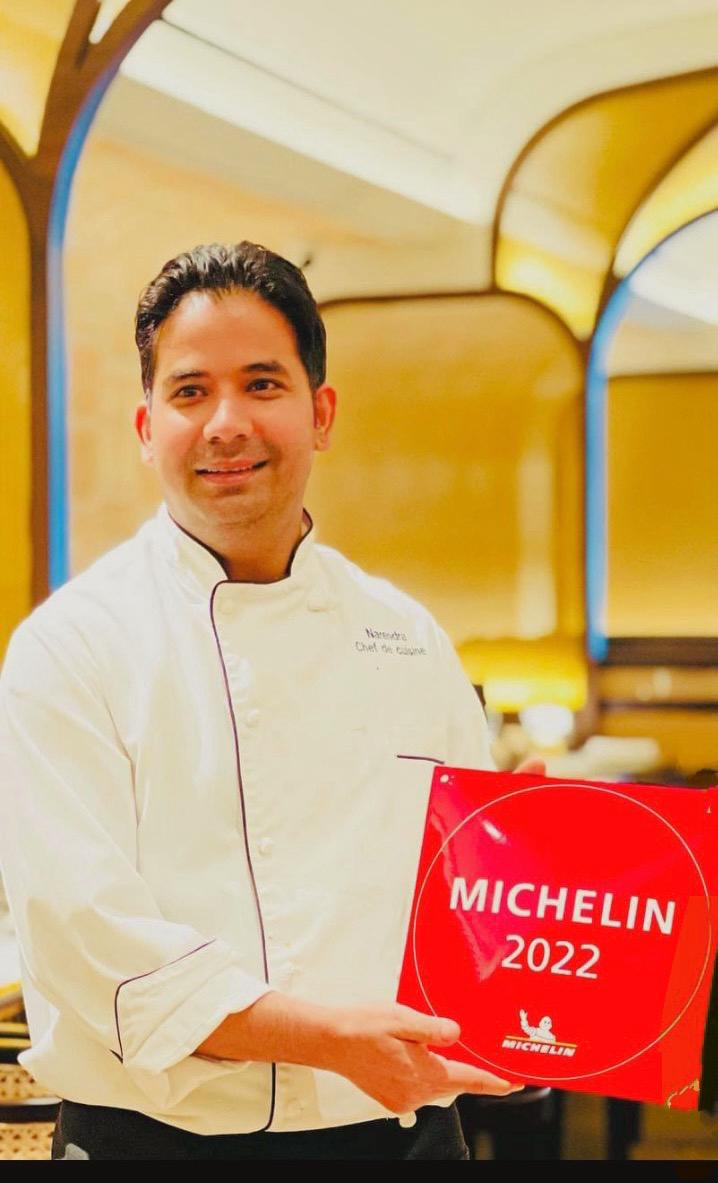
Chef Narendra Panwar Holding Michelin 2022 Trophy
Chef Narendra Panwar’s journey across three continents shows why tradition, emotion, and regional flavors still matter.
In an industry where trends often define success, many chefs spend their careers chasing the next idea that will capture attention—new techniques, modern presentations, or the latest culinary movement.
But for Chef Narendra Panwar, the inspiration that shapes his food comes from somewhere far simpler and far more personal.
It comes from memory.
Today, Panwar leads the kitchen at Kavita Restaurant in Vancouver, after more than two decades of working in some of the world’s most respected restaurants. His career has taken him through kitchens in New Delhi, Bahrain, Dubai, New York, Toronto, and now Canada.
Yet the most important kitchen in his life was the very first one he knew.
It was not a restaurant.
It was home.
The First Lessons Were Never Written Down
Chef Panwar grew up in the hills of Uttarakhand, a place where food is closely tied to seasons, land, and tradition. In those early years, cooking was not something taught through recipes or measurements.
Instead, he learned by watching.
His grandmother and mother cooked slowly and patiently, using ingredients that came from nearby fields and forests. The kitchen smelled of wood smoke and spices, and meals were prepared with a rhythm that came from experience rather than instruction.
He remembers sitting beside them while they prepared dishes like mandua roti, bhatt ki churkani, chainsoo, and aloo ke gutke. Nothing about the process felt complicated, yet the flavors carried depth and comfort.
Looking back now, Panwar realizes those moments shaped more than just his taste in food.
“They didn’t just teach me how to cook,” he says.
“They taught me how to respect food.”
ALSO READ: The Five Restaurants In Las Vegas You Should Try
How Chef Narendra Panwar Discovered the Professional Kitchen?
When Panwar eventually entered the professional world of cooking, it was a very different environment.
His early career began at Moti Mahal in New Delhi, a restaurant that holds legendary status in Indian cuisine for creating dishes like butter chicken and dal makhani. For a young chef, the kitchen was intense, fast, and demanding.
But it was also where he began to understand the discipline required to turn passion into a profession.
From there, his journey expanded internationally. He worked with Hyatt Hotels, joined the opening team of Michelin-starred chef Vineet Bhatia’s Rasoi in Bahrain, and later cooked in renowned restaurants like Masti Cocktail and Cuisine in Dubai and Sona Restaurant in New York.
Each kitchen exposed him to new ideas and different culinary cultures.
Yet no matter how modern or experimental those kitchens became, Panwar noticed something interesting: the dishes people remembered most were often the ones rooted in authenticity.
Learning to See Indian Cuisine Differently
One of the most important turning points in his career came while working with Chef Vineet Bhatia, one of the pioneers of modern Indian fine dining.
Bhatia encouraged Panwar to look at Indian food with fresh perspective—to respect tradition while also exploring new ways of presenting it.
That balance between heritage and creativity stayed with him.
Later, when Panwar took on leadership roles in restaurants abroad, he carried that philosophy into his own kitchens. At Adrak Yorkville in Toronto, the restaurant received recognition from the Michelin Guide for two consecutive years under Chef Panwar’s leadership, a moment that confirmed how powerful regional Indian flavors could be when treated with care.
But for Panwar, recognition was never the real goal.
The real goal was staying honest to the food.
ALSO READ: How to Keep A Cake Moist
Cooking Between Two Worlds
Today in Vancouver, Panwar cooks for guests who come from many cultures and backgrounds. His dishes often combine traditional Indian flavors with modern techniques, creating plates that feel both familiar and new.
Yet he is careful about how far innovation should go.
“I don’t believe you need to reinvent everything,” he says.
“Sometimes the best thing you can do is protect the soul of the dish.”
That idea guides his approach to ingredients as well. Panwar has a deep interest in regional Indian cuisines, many of which remain relatively unknown internationally.
For him, these foods carry stories—stories about land, climate, and communities.
And when those stories are respected, the dish naturally finds its voice.
Food as a Way of Understanding the World
After cooking across continents, Panwar has come to see food as something larger than technique or presentation.
For him, it is a language.
“Cooking is a way of communication,” he explains. “Through food you understand culture, people, and places.”
That belief shapes the environment in his kitchen as well. Young chefs working with him are encouraged to stay curious, learn fundamentals, and explore regional cooking traditions before trying to reinvent them.
His advice is simple but sincere: learn the basics well, travel when you can, and always remain humble in the kitchen.
Because in Panwar’s experience, the greatest chefs are often the ones who never stop learning.
A Future Built on Roots
As Indian cuisine continues to gain global attention, Panwar believes the next chapter will come not from chasing trends, but from exploring the immense variety of regional Indian food.
There are still countless ingredients, techniques, and traditions waiting to be shared with the world.
And for a chef who began his journey in a quiet Himalayan kitchen, that idea feels both exciting and meaningful.
After decades of cooking across the world, Chef Narendra Panwar still believes the most powerful inspiration is the one he discovered first—watching his grandmother cook with patience, care, and love.
In an industry that constantly moves forward, his food continues to move in two directions at once: outward into the world, and inward toward home.
ALSO READ:
A GUIDE TO DESIGN, COMFORT, FUNCTIONALITY TO CREATE THE ULTIMATE RESTAURANT BOOTHS
Top 15 Brunch Spots Around Denver That Will Amaze You
Restaurants Near St. Augustine With Waterfront Views
About The Author