How to Tell If Seafood Is Fresh Before You Buy It: 7 Signs Professional Chefs Look For
The biggest mistake most people make with seafood happens before they ever start cooking. They buy the wrong seafood. No amount of seasoning, expensive cookware, or cooking skill can rescue seafood that wasn’t fresh to begin with.
Professional chefs understand this better than anyone. Before thinking about recipes, marinades, or cooking techniques, they focus on one thing: ingredient quality.
After more than two decades working in restaurants across India, Bahrain, Dubai, New York, Toronto, and Vancouver, Chef Narendra Panwar believes that selecting seafood properly is one of the most valuable skills any home cook can learn.
“The best seafood dishes start at the market, not in the kitchen,” he says.
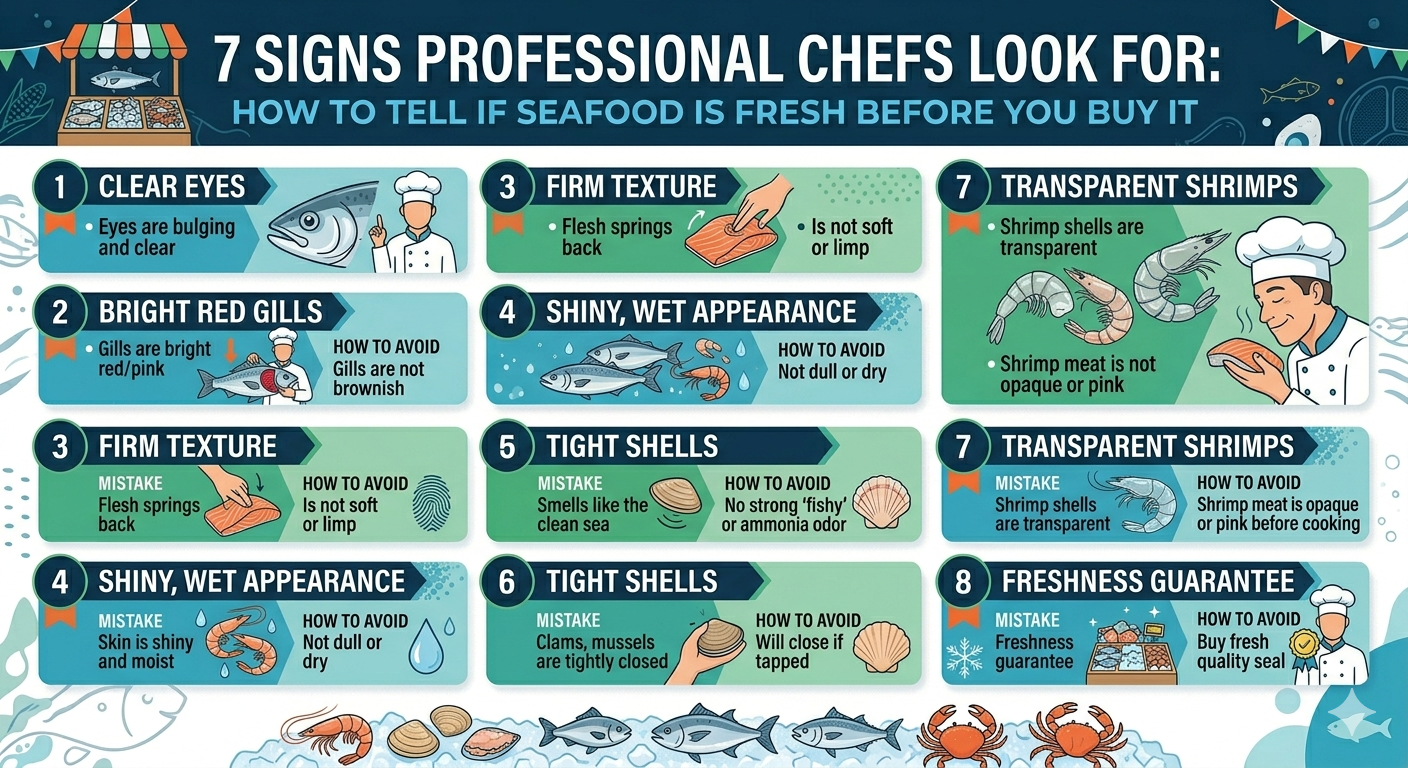
Here are seven signs professional chefs look for when buying seafood.
1. Fresh Seafood Should Not Smell Strongly Fishy
One of the biggest myths is that seafood should smell strongly of fish. Fresh seafood should smell clean.
Many chefs describe the aroma as resembling the ocean, sea breeze, or clean salt water.
If the smell is overpowering or unpleasant, walk away.
2. The Flesh Should Feel Firm
When gently pressed, fresh fish should spring back immediately.
If the flesh feels mushy, soft, or leaves an indentation, freshness may already be declining.
Texture is often one of the easiest quality indicators.
ALSO READ: How to Avoid Common Seafood Cooking Mistakes
3. Whole Fish Should Have Clear Eyes
When purchasing whole fish, the eyes tell an important story.
Fresh fish typically have:
- Clear eyes
- Bright appearance
- Slight natural shine
Cloudy or sunken eyes usually indicate age.
4. Check the Surface
Fresh seafood should look moist but not slimy.
A glossy appearance is normal.
A thick sticky coating is not.
Always inspect the surface carefully before purchasing.
ALSO READ: How to Marinate Seafood Without Ruining Its Natural Flavor
5. Ask Questions
Good seafood vendors welcome questions.
Ask:
- When was it delivered?
- Was it previously frozen?
- Where was it sourced?
Professional chefs ask these questions regularly.
Home cooks should, too.
6. Frozen Seafood Is Not the Enemy
Many consumers automatically assume fresh is better.
That is not always true.
In many cases, seafood is frozen shortly after being caught, preserving quality extremely well.
What matters most is proper handling and storage.
A well-frozen product can often outperform poorly handled “fresh” seafood.
7. Trust Your Instincts
If something looks wrong, smells strange, or simply doesn’t inspire confidence, don’t buy it.
Experienced chefs develop instincts over time.
Consumers should learn to trust their own as well.
Why Quality Matters More Than Recipes
According to food science research, seafood is one of the most perishable foods available. Even small changes in storage conditions can accelerate spoilage, reducing quality, freshness, and shelf life. This is why professional chefs pay close attention to freshness indicators before purchasing seafood.
Chef Narendra Panwar often says that great seafood cooking begins with respect for the ingredient.
The reason seafood dishes in good restaurants taste different is not always because of secret techniques.
Often, it is because chefs start with better ingredients.
A perfectly fresh prawn needs very little help.
A beautiful piece of fish doesn’t need to be hidden under heavy sauces.
When quality is high, simplicity works.
ALSO READ: BEST FOOD ARTICLES
Final Thoughts
Learning how to identify fresh seafood is one of the most useful culinary skills you can develop.
It saves money.
It improves flavor.
And it dramatically increases your chances of success in the kitchen.
Before worrying about recipes, start by choosing better seafood.
Professional chefs do—and the results speak for themselves.
About The Author