How to Marinate Seafood Without Ruining Its Natural Flavor
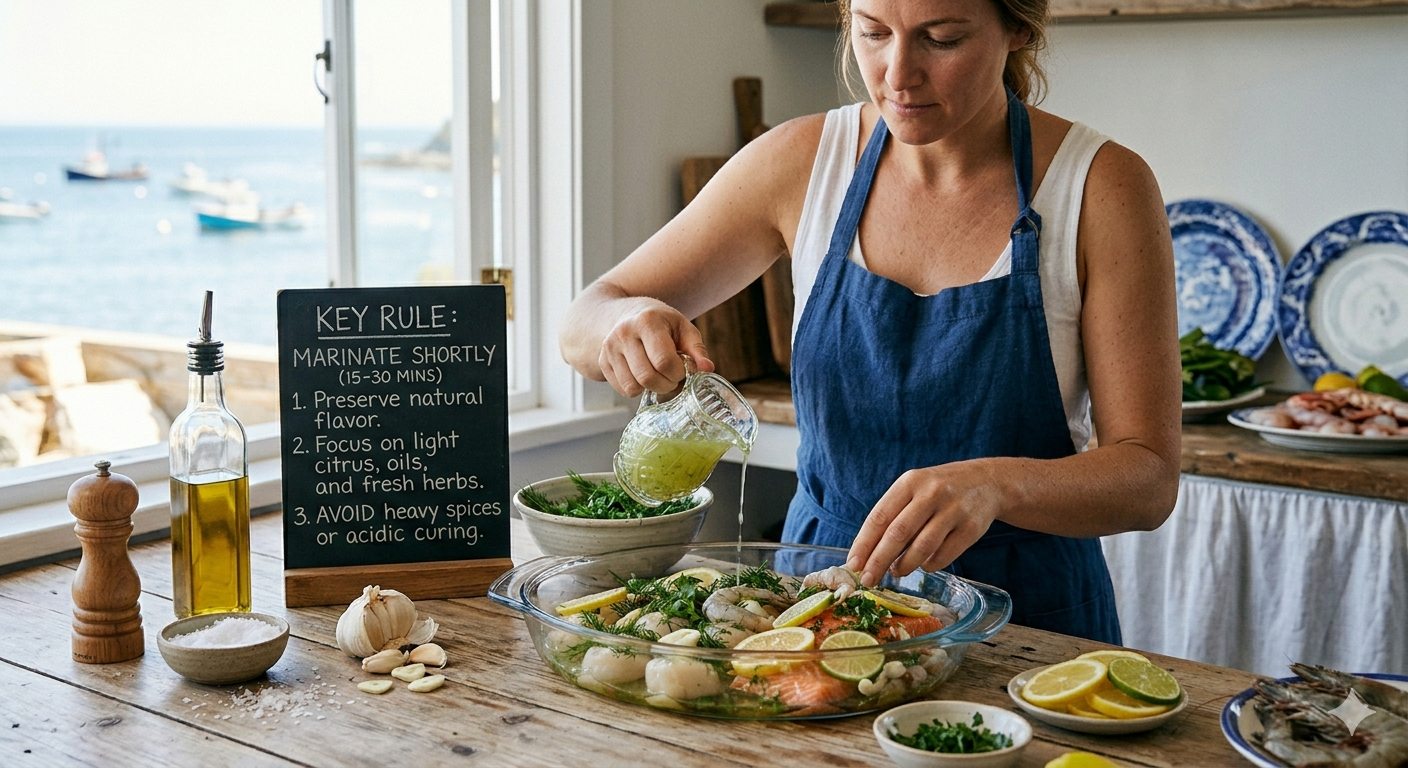
Many home cooks believe that a good marinade should completely transform seafood. Professional chefs often believe the opposite. The purpose of marinating seafood is not to hide its flavor. It is to enhance what is already there.
This distinction is important because seafood is one of the most delicate proteins in the kitchen. Unlike red meat or poultry, fish, shrimp, scallops, and other seafood absorb flavors quickly and can easily become overpowered.
After more than two decades working in restaurants across India, Bahrain, Dubai, New York, Toronto, and Vancouver, Chef Narendra Panwar has learned that successful seafood dishes usually rely on balance rather than intensity.
“The best marinades should support the seafood, not compete with it,” he says.
Here is how professional chefs approach seafood marination.
ALSO READ: How to Tell If Seafood Is Fresh Before You Buy It
Why Seafood Requires a Different Approach
Many marinades designed for meat contain large amounts of acid, salt, and strong spices.
Seafood reacts differently.
Because it has a softer structure, seafood absorbs flavors much faster. Leave it in a powerful marinade for too long, and you risk losing the natural sweetness and texture that make seafood special.
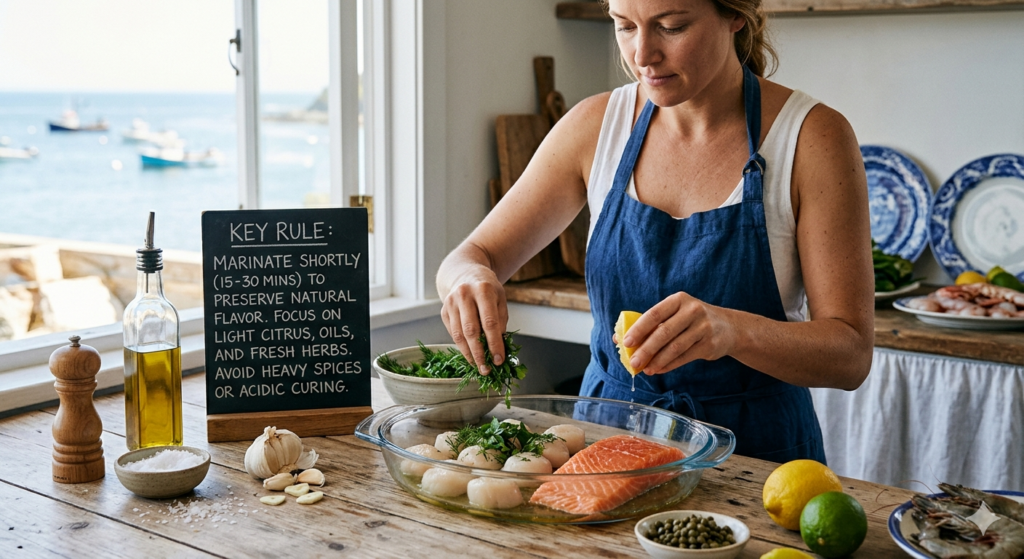
This is why chefs often use lighter marinades and shorter marination times.
The Three Elements of a Good Seafood Marinade
Most successful seafood marinades contain three components:
1. Fat
Fat helps carry flavor and keeps seafood moist during cooking.
Common choices include:
- Olive oil
- Coconut oil
- Sesame oil
- Butter-based marinades
2. Acidity
Acid brightens flavor and balances richness.
Popular options include:
- Lemon juice
- Lime juice
- Raw mango
- Vinegar
- Tamarind
However, moderation is important.
Too much acid can begin “cooking” seafood before it reaches the pan.
3. Aromatics
These ingredients add depth without overwhelming the seafood.
Examples include:
- Garlic
- Ginger
- Curry leaves
- Fresh herbs
- Mild spices
How Long Should You Marinate Seafood?
One of the biggest mistakes home cooks make is marinating seafood for too long.
General guidelines:
Shrimp and Prawns
15–30 minutes
Fish Fillets
20–45 minutes
Scallops
15–20 minutes
Firm Fish
Up to 1 hour
Longer is not always better.
In many cases, it is worse.
ALSO READ: How to Avoid Common Seafood Cooking Mistakes
Common Marinating Mistakes
Using Too Much Acid
Excess lemon juice or vinegar can damage texture and create a mushy result.
Using Too Many Spices
A marinade should complement seafood, not bury it.
Marinating Overnight
This may work for some meats, but rarely benefits seafood.
Skipping Refrigeration
Always marinate seafood in the refrigerator for food safety.
A Lesson From Coastal Indian Cooking
Many traditional coastal Indian seafood recipes demonstrate remarkable restraint.
Instead of relying on heavy marinades, they focus on balance.
Ingredients such as curry leaves, coconut, turmeric, ginger, green chilies, and raw mango are used carefully to support the seafood rather than dominate it.
This philosophy is something Chef Narendra Panwar frequently highlights in his own cooking.
Whether preparing seafood in Canada or India, the principle remains the same: respect the ingredient first.
MORE TO READ: Cooking and Food Articles
Final Thoughts
The secret to marinating seafood is surprisingly simple.
Do less.
Use fresh ingredients.
Keep marination times short.
Focus on balance.
When seafood is fresh and properly handled, it does not need complicated marinades to taste exceptional.
As Chef Narendra Panwar often reminds young cooks, great seafood should still taste like seafood.
A good marinade simply helps it tell its story more clearly.
About The Author