10 Common Seafood Cooking Mistakes Most Home Cooks Make (And How to Avoid Them)
Seafood has a reputation for being difficult to cook, but most mistakes happen long before it reaches the pan. Unlike red meat or poultry, seafood is delicate. A few extra minutes of cooking, improper storage, or poor ingredient handling can dramatically affect flavor and texture.
After working in restaurants across India, Bahrain, Dubai, New York, Toronto, and Vancouver, Chef Narendra Panwar has seen the same seafood mistakes repeated countless times by home cooks.
The good news? Most of these mistakes are easy to fix, making delicious seafood within reach for anyone willing to make a few changes in their approach.
Research has shown that the nutritional value of seafood can be influenced by the cooking method used. Studies have found that techniques such as steaming, baking, and grilling often help preserve more nutrients compared to methods that involve prolonged cooking or deep frying.
Factors such as temperature, cooking time, and moisture loss can affect the retention of proteins, healthy fats, vitamins, and minerals. This highlights the importance of not only choosing quality seafood but also preparing it using appropriate cooking methods to maximize its nutritional benefits.
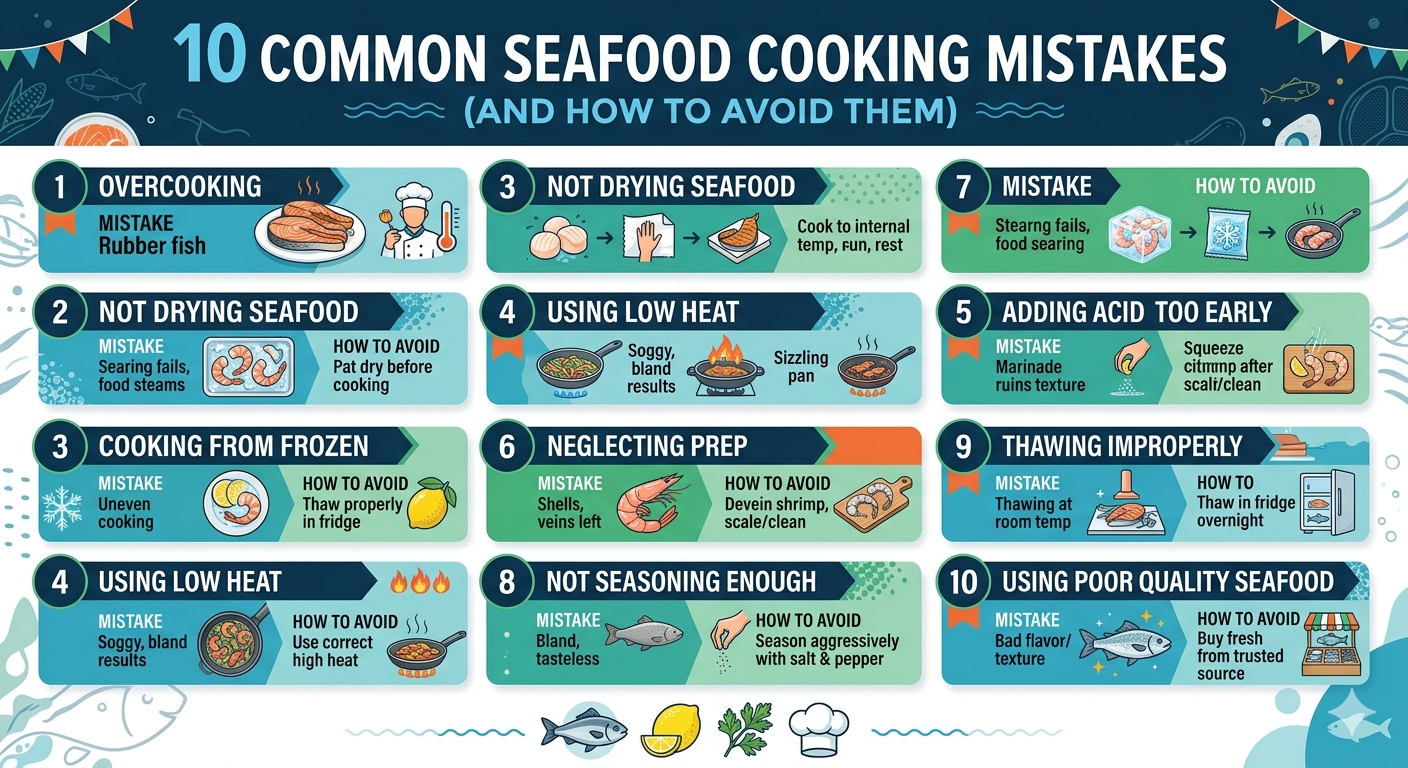
Let’s explore ten of the most common seafood cooking mistakes—and see what professional chefs do differently to avoid them.
1. Overcooking Seafood
This is by far the most common mistake.
Prawns become rubbery, fish turns dry, and delicate seafood loses its natural sweetness when cooked for too long.
Professional chefs understand that seafood continues cooking even after it leaves the heat.
CHEF TIP : Prawns usually need only a few minutes. Once they turn opaque and curl naturally, they’re ready.
2. Not Drying Seafood Before Cooking
Many home cooks place wet seafood directly into a hot pan.
The result?
Instead of searing, the seafood steams.
Pat the seafood dry using paper towels before cooking. This helps create better texture and flavor.
3. Using Too Many Spices
One of the biggest misconceptions about seafood is that more seasoning equals more flavor.
In reality, seafood already has delicate natural flavors that should be enhanced, not buried.
The best seafood dishes allow the ingredient to remain the star.
ALSO READ: How to Tell If Seafood Is Fresh Before You Buy It: 7 Signs Professional Chefs Look For
4. Ignoring Freshness Indicators
Fresh seafood should never smell overwhelmingly “fishy.”
When buying seafood, look for:
- Clean ocean-like smell
- Firm texture
- Bright appearance
- No slimy surface
If something feels off, it probably is.
ALSO READ: How to Marinate Seafood Without Ruining Its Natural Flavor
5. Throwing Away Prawn Shells
Many people discard prawn shells and heads immediately.
Professional kitchens rarely do.
These shells contain tremendous flavor and can be transformed into seafood stock for soups, curries, risottos, and sauces.
According to Chef Narendra Panwar, a good prawn stock can elevate a seafood dish more than any spice blend.
6. Cooking Straight From Frozen
Frozen seafood is perfectly acceptable when handled properly.
The mistake is cooking it before it has thawed correctly.
The safest approach is to thaw seafood overnight in the refrigerator.
This helps preserve texture and allows for more even cooking.
7. Using the Wrong Pan Temperature
Seafood cooks quickly.
A pan that is too cold prevents proper browning, while a pan that is excessively hot can overcook the exterior before the inside is ready.
Professional chefs focus on controlled heat rather than extreme heat.
8. Skipping Acid
A small amount of acidity can transform seafood.
Lemon, lime, raw mango, tamarind, and vinegar help brighten flavors and create balance.
Many classic coastal seafood recipes rely on acidity to complement natural sweetness.
9. Not Resting the Seafood
Most people associate resting with steak.
However, larger fish fillets also benefit from a brief resting period after cooking.
A minute or two allows juices to redistribute and helps maintain moisture.
10. Forgetting That Simplicity Wins
The best seafood dishes are rarely the most complicated.
Across coastal regions of India, Europe, and North America, many beloved seafood recipes rely on a small number of quality ingredients prepared with care.
Chef Narendra Panwar often emphasizes that great seafood cooking is about restraint.
When ingredients are fresh, and technique is sound, simplicity usually produces the best results.
ALSO READ: Best Food Tips
Final Thoughts
Seafood does not require advanced culinary skills to prepare successfully.
It requires attention.
By avoiding these common mistakes, home cooks can dramatically improve texture, flavor, and consistency.
As Chef Narendra Panwar’s career has shown—from Michelin-recognized kitchens to modern Indian restaurants in North America—the difference between average seafood and exceptional seafood often comes down to small details.
Respect the ingredient, keep the cooking simple, and let the seafood speak for itself.
About The Author