Indian Curry vs Tandoor Cooking: What Makes These Two Classic Techniques So Different?
Indian cuisine is often described through its spices, but spices are only part of the story.
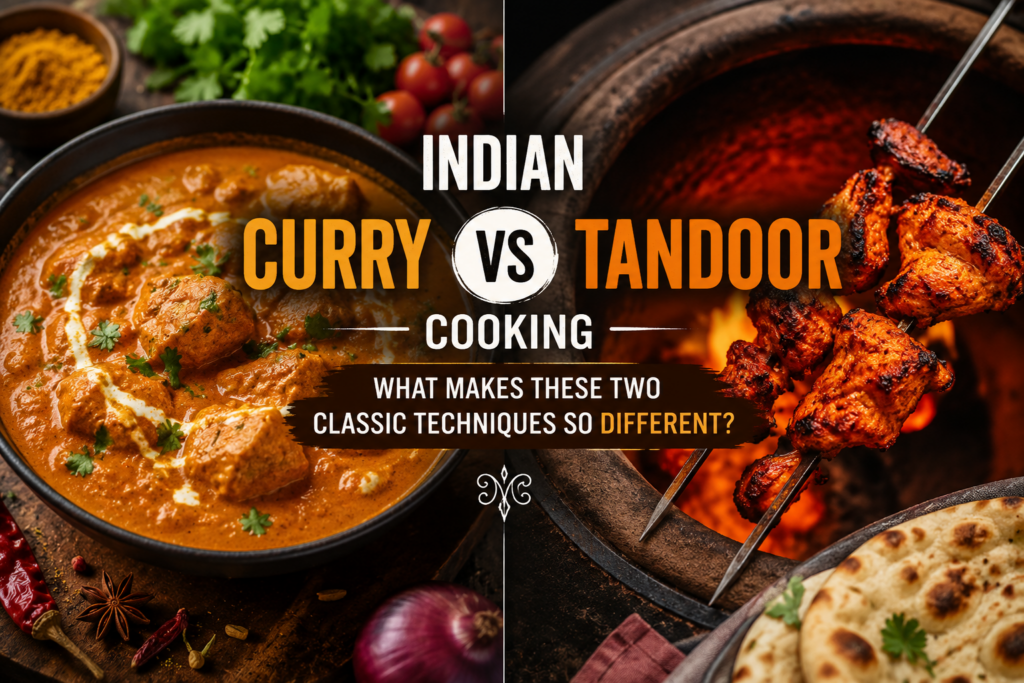
Two of the country’s most recognizable cooking traditions—curry cooking and tandoor cooking—show just how differently Indian chefs can use heat, ingredients and technique to create flavour.
A slow-cooked curry can transform onions, spices and tomatoes into a deeply layered sauce. A tandoor, meanwhile, can expose food to intense heat and create the smoky aroma, charred edges and distinctive texture associated with dishes such as naan, tandoori chicken and kebabs.
The ingredients may be familiar.
The techniques are completely different.
Understanding that difference can actually make you a better cook—and help you order Indian food more intelligently when visiting a restaurant.
What Is Curry Cooking?
Indian curry is not one specific dish or technique.
Across India, curries vary enormously depending on region, ingredients and cooking traditions.
Some are thick and creamy. Others are light and brothy. Some rely heavily on tomatoes and onions, while others use coconut, yogurt, tamarind or regional spices.
The basic idea, however, is often about building layers of flavour over time.
A typical curry may involve:
- Aromatics such as onion, garlic and ginger
- Whole spices
- Ground spices
- Tomatoes, yogurt, coconut or another liquid base
- Meat, seafood, vegetables or legumes
- Controlled simmering
The order in which ingredients are added matters.
Spices added too early can become bitter. Added too late, they may taste raw. Onions may need proper caramelization before the liquid is introduced.
That’s why a good curry isn’t simply a mixture of ingredients boiled together.
It is a process.
What Is Tandoor Cooking?
A tandoor is a traditional clay or metal oven designed to reach extremely high temperatures.
Unlike conventional home ovens, a tandoor can create intense radiant heat while also allowing food to develop characteristic roasted and charred surfaces.
This makes it particularly effective for:
- Naan and other flatbreads
- Tandoori chicken
- Seekh kebabs
- Fish
- Paneer
- Marinated vegetables
One of the defining characteristics of tandoor cooking is the contrast it creates.
The outside can develop a beautifully charred surface while the inside remains tender.
That combination of high heat, moisture control and direct cooking is one reason tandoori food has become so recognizable around the world.
Curry vs Tandoor: The Biggest Difference
The simplest way to understand the distinction is this:
Curry builds flavour through controlled cooking in a sauce or gravy.
Tandoor builds flavour through intense dry heat, roasting and charring.
Neither technique is inherently better.
They simply produce different results.
| Curry Cooking | Tandoor Cooking |
|---|---|
| Usually involves a liquid or gravy | Primarily dry-heat cooking |
| Flavour develops gradually | Flavour develops rapidly at high heat |
| Often creates a sauce | Creates roasted and charred surfaces |
| Long simmering is common | Short, intense cooking is common |
| Spices are incorporated into the cooking liquid | Marinades and seasoning are often crucial |
| Texture can become soft and rich | Exterior can become crisp or charred |
Why Tandoor Marinades Matter So Much
If you’ve ever wondered why restaurant-style tandoori chicken tastes different from simply roasting chicken at home, the answer isn’t only the oven.
The marinade matters enormously.
A traditional-style marinade may contain ingredients such as yogurt, spices, ginger, garlic, lemon juice and salt.
The marinade does several things at once:
- Adds flavour
- Helps season the surface
- Contributes moisture
- Creates a base for browning and char
- Helps spices adhere to the ingredient
But marinating something for longer doesn’t automatically make it better.
The ideal marination time depends on the ingredient and the marinade itself.
Acidic ingredients, for example, can affect texture when used excessively or for very long periods.
Why Restaurant Curries Taste Different
There is another reason restaurant curries can taste noticeably different from home cooking.
Professional kitchens prepare ingredients in advance and build components systematically.
A restaurant may have prepared onion bases, spice blends, stocks, gravies and marinades ready before service begins.
This allows chefs to concentrate on finishing each dish consistently rather than starting every component from scratch after an order arrives.
Professional curry cooking also depends heavily on controlling heat.
Too much heat can burn spices or cause a sauce to split.
Too little can leave flavours underdeveloped.
The goal is controlled cooking—not simply maximum heat.
A Useful Tip: Don’t Judge Indian Food by Its Colour
Bright red doesn’t necessarily mean extremely spicy.
And a pale curry doesn’t necessarily mean mild.
Restaurant dishes may use ingredients such as Kashmiri chilli powder, paprika or other spices to create colour without producing the same level of heat associated with very hot chillies.
Instead of judging a dish by appearance, ask the restaurant:
“Is this dish mild, medium or hot?”
And if you have a low tolerance for chilli, say so before the dish is prepared.
Good Indian cooking isn’t about making every dish painfully spicy.
It’s about balance.
What Should You Order If You Want to Compare Both Techniques?
Here’s a simple experiment the next time you visit an Indian restaurant.
Order:
One tandoor preparation + one curry + one Indian bread or rice.
For example:
- Tandoori chicken or paneer tikka
- A regional chicken, lamb, seafood or vegetable curry
- Naan, roti or rice
Taste the tandoor dish first.
Pay attention to the aroma, char, texture and seasoning.
Then try the curry.
Notice how the flavour develops differently through the sauce, spices and cooking process.
It’s almost like comparing two completely different ways of expressing the same cuisine.
What Professional Chefs Learn From Both
For chefs working with Indian cuisine, curry and tandoor require very different technical skills.
Curry cooking demands patience and control.
Tandoor cooking demands confidence with intense heat.
Both require consistency.
A chef working with a tandoor needs to understand how different ingredients respond to temperature. A curry chef needs to know when an ingredient has reached the right stage before moving to the next step.
This is why professional Indian kitchens often divide responsibilities into specialized sections.
The techniques may look simple to a diner.
Mastering them is anything but simple.
The Bigger Lesson Behind Indian Cooking
Indian cuisine is sometimes reduced to a list of spices.
But the real depth comes from how those ingredients are treated.
The same ingredient can taste completely different depending on whether it is:
- Slow-cooked
- Roasted
- Grilled
- Smoked
- Fried
- Fermented
- Steamed
- Cooked in a tandoor
That is why learning Indian food means learning techniques, not simply memorizing recipes.
And this distinction becomes especially interesting when looking at chefs who have worked across different culinary environments.
Chef Satpal Singh, for example, has built a career around modern Indian cuisine and currently works in the curry and tandoor section at Tikka Indian Cuisine in Florida. His professional journey has included kitchens in Pune, Dubai, New York and Toronto, including experience at Adrak Yorkville, which received Michelin Guide recognition in 2022 and 2023.
His career illustrates something important about Indian cooking: traditional techniques can travel internationally without losing their identity.
The Next Time You Eat Indian Food, Look Beyond the Spice
The next time you sit down at an Indian restaurant, don’t simply ask:
“Is it spicy?”
Ask:
How was it cooked?
Was it slow-simmered?
Was it cooked in a tandoor?
Was it marinated?
Was coconut used?
Was the dish designed around smoke, acidity, sweetness or heat?
Those questions can completely change the way you experience Indian food.
Because once you understand the technique behind the dish, you start tasting more than just spices.
You start tasting the cooking itself.
ALSO READ:
10 Common Seafood Cooking Mistakes Most Home Cooks Make (And How to Avoid Them)
How to Marinate Seafood Without Ruining Its Natural Flavor
About The Author