
Protecting Your Energy: The Ultimate Survival Guide for the Modern World
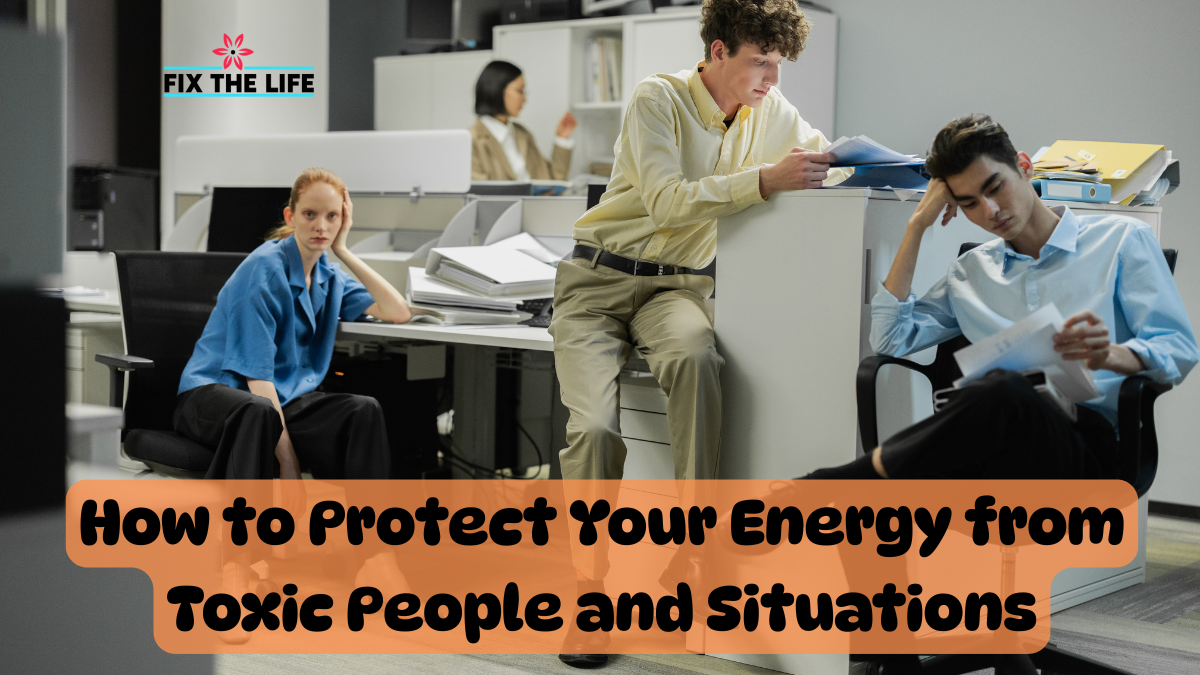
There are days when nothing dramatic happens, yet you still feel completely drained. You didn’t pull an all-nighter, and you didn’t deal with a major crisis, but you feel heavy and exhausted. The reality of 2026 is that if you don’t learn how to protect your energy from negativity, you will constantly find yourself running on empty. In a world of digital noise and “emotional vampires,” plugging the holes in your “energy bucket” is no longer just a luxury—it is a survival skill.
1. What “Energy” Actually Is (The Science of Bandwidth)
When we talk about “protecting your energy,” we aren’t talking about something mystical. We are talking about your Cognitive Load and Emotional Bandwidth.
Think of your brain like a smartphone. You might not be “using” it to make a call, but if 20 apps are running in the background—GPS, high-def video, and constant notifications—the battery will die by noon.
Every annoying news alert, every negative comment you read online, and every “polite” conversation you don’t want to be in is a Background App. They are constantly pulling from your central battery even when you think you’re resting.
2. The Discipline Link: What the Gym Taught Me
I’ve spent years managing a gym and training people, and there is a massive lesson from physical fitness that applies to your mental energy: The “Rest Between Sets” Rule.
In the gym, if you try to lift your maximum weight for 60 minutes straight without a single break, your muscles will fail, or you’ll get injured. You must rest between sets for the muscle to recover its power.
Your mind works exactly the same way. If you “heavy lift” emotional conversations, work stress, and social media drama all day without a 5-minute mental “rest set,” your brain will eventually hit failure. I realized that my most exhausted trainees weren’t the ones lifting the most weight—they were the ones who couldn’t turn off their mental “background apps” while they were resting.
3. The “Contagion” Effect: Why You Catch Stress
Top psychologists use a term called Emotional Contagion. Humans have “mirror neurons” that make us instinctively mimic the feelings of people around us to build social bonds.
If you sit next to someone who is vibrating with anxiety, anger, or constant victimhood, your nervous system will eventually start to match theirs. You are literally “catching” their stress like a cold.
The Golden Rule: You can be a supportive friend without becoming a “human trash can” for someone else’s emotional waste.
4. Tactics from the Pros: How to Fight Back
The “Grey Rock” Method
If you have a “vampire” in your life that you cannot avoid (like a difficult boss or a family member), you become a Grey Rock. You make yourself the most boring thing in the room. Give short, non-emotional answers: “Okay,” “That’s interesting,” “I see.” When you stop giving them an emotional reaction to feed on, they eventually move on to someone else.
The Social Battery Audit
To fix your energy, you have to know where it’s going. Look at your last three days and mark every interaction as:
- Drainers (Red): Left you feeling heavy, annoyed, or exhausted.
- Chargers (Green): Left you feeling lighter, inspired, or excited.
- Neutrals (Grey): No real effect on your mood.
The Strategy: If your day is 80% “Red Zone,” no amount of sleep will fix your fatigue. You must intentionally schedule “Green Zone” blocks—like a walk in nature or a chat with a mentor—to balance the scales.
5. Questions Google Doesn’t Answer (The Deep Dive)
“Why do I feel like a ‘jerk’ for setting boundaries?”
This is a survival mechanism. We are taught that “being a good person” means being available 24/7. When you start saying “no,” your brain triggers a False Guilt. Realize that a “No” to someone else is a “Yes” to your own mental health.
“Can my phone actually drain my physical energy?”
Yes. “Digital Fatigue” is real. Your brain has to process micro-information at a rate it wasn’t built for. Twenty minutes of scrolling through “angry” content is more physically exhausting for your nervous system than sixty minutes of focused, creative work.
“Why does my energy drop in certain offices or buildings?”
This is often Sensory Overload. Harsh lights, constant background humming, and lack of natural air can trigger a low-level “threat response” in your brain, slowly draining your battery without you noticing.
6. Practical “Energy Shields” You Can Use Today
- The “Immediate Exit” Script: Stop waiting for a conversation to end. Say: “Hey, I’ve got a hard stop right now for a project, so I’ve gotta run, but I’ll catch you later”
- The 20-Minute “Digital Blackout”: After a stressful meeting, put your phone in another room. No scrolling. Let your brain “offload” the data it just took in.
- Physical Grounding: When someone is dumping their stress on you, focus on the feeling of your feet on the floor. This “grounds” you in your own body so you don’t get swept away by their storm.
Final Thoughts
Protecting your energy isn’t about being “Zen” or perfect. It’s about Awareness.
The next time you feel drained for “no reason,” stop and look around. Who did you talk to? What did you read? Where did your attention go? Once you find the leak, you can finally plug it.
What is one thing you’re going to say “no” to tomorrow just to keep your energy for yourself?
About The Author